


Description
- Programmable 16 MHz ATmega328PB AVR microcontroller (24 digital I/O pins)
- Logic voltage: 5 V / Operating voltage: 5.5 - 15 V
- Preloaded with Arduino-compatible TTL serial bootloader
- 32 KB flash, 2 KB SRAM, 1 KB EEPROM
- Features a blue power LED
The A-Star 328PB Micro Programmable Module 5V, 16MHz is a tiny programmable module featuring the ATmega328PB AVR microcontroller, a backward-compatible replacement for the popular ATmega328P that features more general-purpose I/O and many additional peripherals. This module provides access to all 24 digital input/output pins (of which 9 can be used as PWM outputs and 8 as analog inputs).
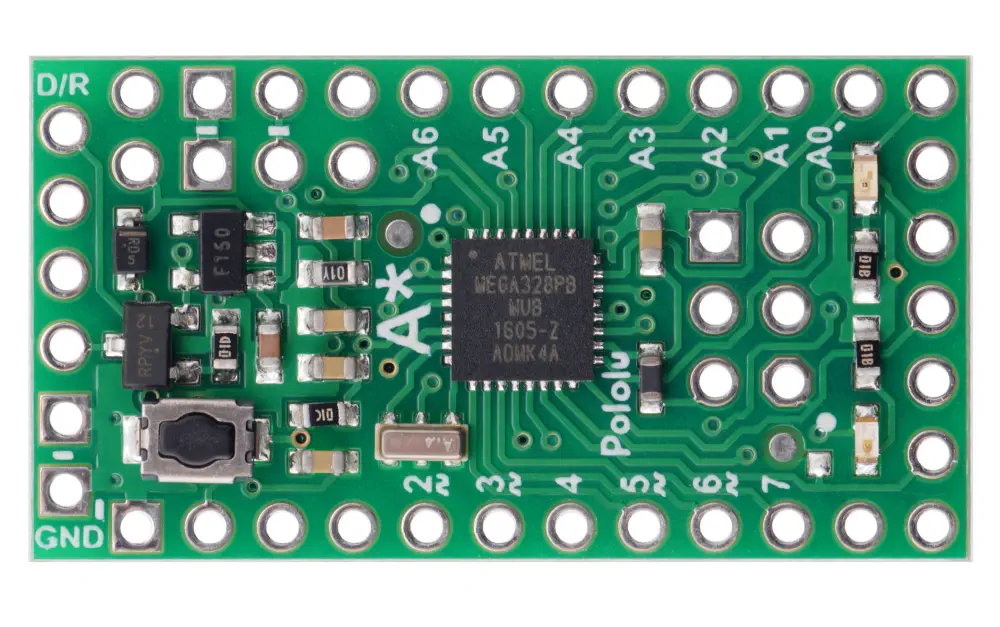
It ships preloaded with an Arduino-compatible serial bootloader that enables programming through the Arduino IDE via a USB-to-serial adapter, and the ISP pins are accessible for programming with an AVR programmer. This version features a 16 MHz resonator and a 5 V regulator that can be powered from 5.5 V to 15 V supplies.
- 1 x A-Star 328PB Micro Programmable Module 5V, 16MHz
- 0.7″ × 1.3″ × 0.1″
- Weight: 1.5 g
- Processor: ATmega328PB @ 16 MHz
- RAM size: 2048 bytes
- Program memory size: 32 Kbytes
- Motor channels: 0
- User I/O lines: 24
- Minimum operating voltage: 5.5 V
- Maximum operating voltage: 15 V
- Logic voltage: 5 V
- Reverse voltage protection
- Version: 5 V logic, 16 MHz resonator